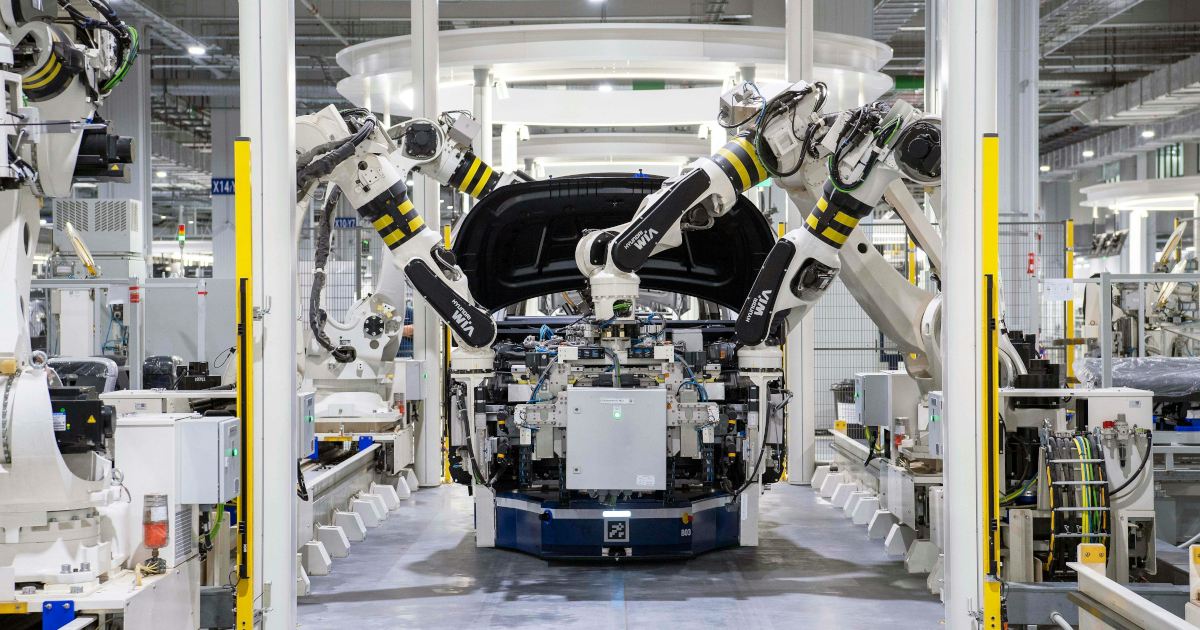
The artificial intelligence boom is often framed around models, chips and data centers, but the capital flowing into those systems is increasingly shaping the less visible segments of semiconductor manufacturing. TrendForce estimates that capital spending by the nine largest cloud companies is projected to reach roughly $830 billion in 2026. That scale of investment only converts into functioning hardware if processors can be packaged, inspected for defects and produced at volume, which places automated production and inspection equipment at a critical point in the supply chain.
Nightfood Holdings Inc. (OTCQB: NGTFD), operating as TechForce Robotics, is positioning itself in that segment. According to its profile, the company recently completed a deal to acquire a defined set of CoWoS automated optical inspection technology. CoWoS, or Chip-on-Wafer-on-Substrate, is an advanced packaging approach used to integrate high-bandwidth memory with logic chips, and optical inspection is essential for catching defects before costly packages are completed. Nightfood is planning a 20,000-square-foot production site in Taiwan, with first deliveries targeted for late November or early December 2026, subject to production readiness and customer orders.
The move matters because advanced packaging has become a bottleneck in the AI supply chain. As chipmakers push more computing power into each package, the number of process steps and the potential for defects rise, increasing the value of inspection and metrology. Established suppliers such as KLA Corporation (NASDAQ: KLAC) and Onto Innovation Inc. (NYSE: ONTO) have built significant businesses around process control, while Applied Optoelectronics Inc. (NASDAQ: AAOI) illustrates how optical components feed into the same buildout. Nightfood's effort to establish itself as a source of innovation in AI and automation places it alongside these names, though its position is far earlier and its timeline carries execution risk.
The broader implication is that the AI investment cycle is not only a demand story for chip designers; it is also a capacity story for the equipment makers that support test, packaging and inspection. If hyperscaler spending reaches the levels TrendForce projects, the tools that verify and assemble chips will remain in tight demand. For investors, the segment offers exposure to AI growth that is less dependent on any single model or chip architecture. Nightfood's planned Taiwan site and its late-2026 delivery target will be watched as an early test of whether a smaller entrant can gain traction in a field dominated by larger incumbents. More detail on the market outlook is available in the Read More>> coverage.