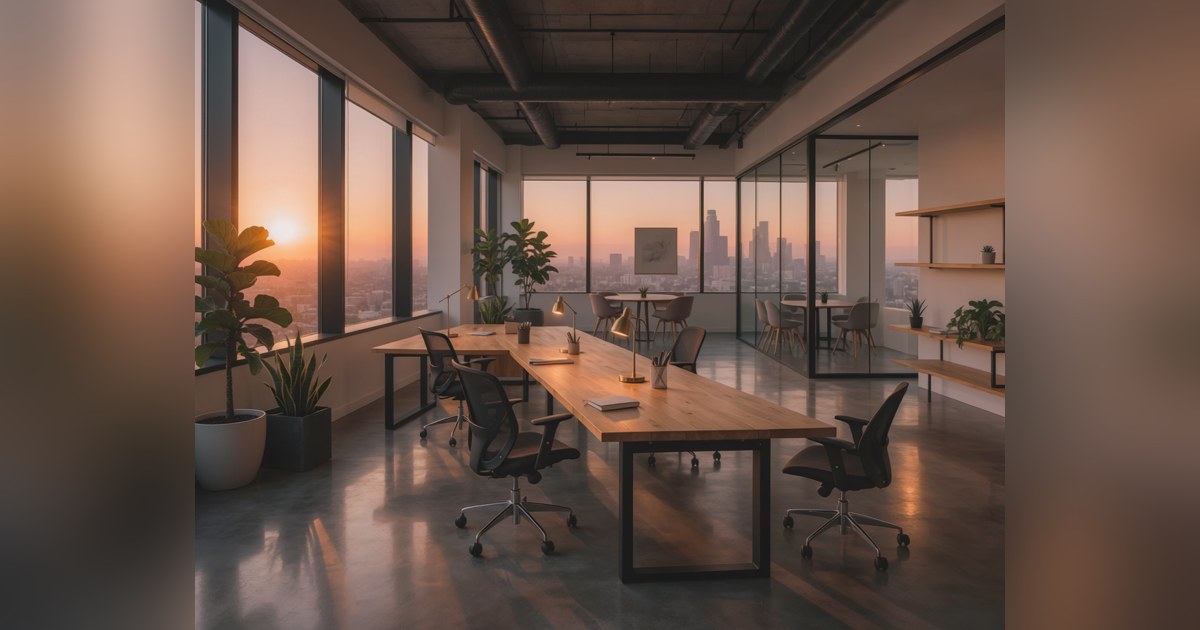
The coworking industry has a branding problem: most people still envision open desks and ping-pong tables, but that image no longer captures reality. According to Jerome Chang, founder of Los Angeles-based BLANKSPACES, coworking has matured into a broad spectrum of models, from bare-bones hot desks to fully private, amenity-rich suites. This shift matters because it changes how landlords, tenants, and investors should assess flex space. No longer a niche for tech startups, coworking now competes directly with traditional executive suites and influences real estate decisions across the board.
The blending of coworking and executive suites is central to this evolution. Executive suites, like those from Regus and Premier Office Suites, dedicate 70 to 75 percent of their floor space to private offices, with a formal front-desk feel. Many coworking locations now include private offices too, but at a lower percentage—often 30 to 50 percent—leaving more room for open, shared areas. The difference is immediately visible: an executive suite feels like a maze of hallways leading to numbered doors, while a coworking space is designed to feel like an open kitchen, where activity is part of the experience. This distinction is not just aesthetic; it reflects different business models and customer needs.
Chang uses the hotel industry to explain the full range of flex space. Just as hotels range from a roadside motel to a five-star resort, flex office spans a wide range of price points and experiences. He describes traditional executive suites as the Sheraton of the office world: reliable, functional, and a little sterile. Coworking spaces built around community and design are closer to the Ace Hotel, where the rooms might be modest but the atmosphere, coffee, and crowd are the real draw. The comparison goes deeper: hotels succeed by combining flexibility with services and amenities, something an apartment lease cannot offer. Coworking applies that same formula to office space, offering short-term flexibility, on-site services, and amenities that range from a simple lounge to a dedicated wellness room.
Startups built the coworking category, but they are no longer the whole market. Early coworking was closely tied to the tech startup world, largely because startups needed flexible space and gravitated toward collaborative culture. That connection runs deep: Chang points out that the hashtag, now used across every major social platform, was invented by a coworking space founder in San Francisco back in 2007—a small but telling example of how closely coworking and tech culture have been linked from the start. That link is still visible today. LA Tech Week, an event tied to venture firm a16z’s effort to revive the region’s startup scene, continues to draw attention to the overlap between coworking and technology. But the customer base has expanded well past startups. Corporate clients, law firms, and other traditional tenants now make up a meaningful share of who walks through the door. This diversification signals that flex space is becoming a mainstream real estate option, not just a stopgap for young companies.
For landlords and tenants alike, the takeaway is that flex space is not a single product to evaluate. It is a category with real variation, from amenity-heavy locations built for community to lean, private-office setups built for teams that just want flexibility without the extras. Understanding which model fits a specific building or business is the first step to making flex space work. As the industry continues to evolve, the ability to distinguish between these models will be crucial for anyone navigating the office market. BLANKSPACES, founded in Los Angeles in 2008 by architect Jerome Chang, is one of the oldest coworking brands in America and now the largest in Southern California, built on a partnership model that shares risk with landlords rather than relying on a traditional lease. Its experience illustrates how flex space has grown up—and why that maturity matters for the future of work.