Huawei's consumer business is entering a new phase defined by self-reliance and technological breakthroughs, according to Executive Director Richard Yu, who addressed an international media roundtable in Shenzhen. The company's ability to design its own chips and operating system despite limited access to advanced semiconductor processes signals a significant shift in the global technology landscape, with implications for competitors and partners alike.
Between 2007 and 2025, Huawei invested more than CNY1.8 trillion into research and development, rapidly increasing its R&D intensity from roughly 10% of annual revenue to over 20% in recent years. That sustained commitment has yielded robust core capabilities and a vast patent portfolio. The latest Mate 90 series, powered by the Kirin 9050 Pro chip, delivers 31% higher overall performance than its predecessor, with Huawei designing key components including the Balong modem, image sensor processor, mobile security processor, Lingxi CPU, Maleoon GPU, and NPU based on its Da Vinci architecture.
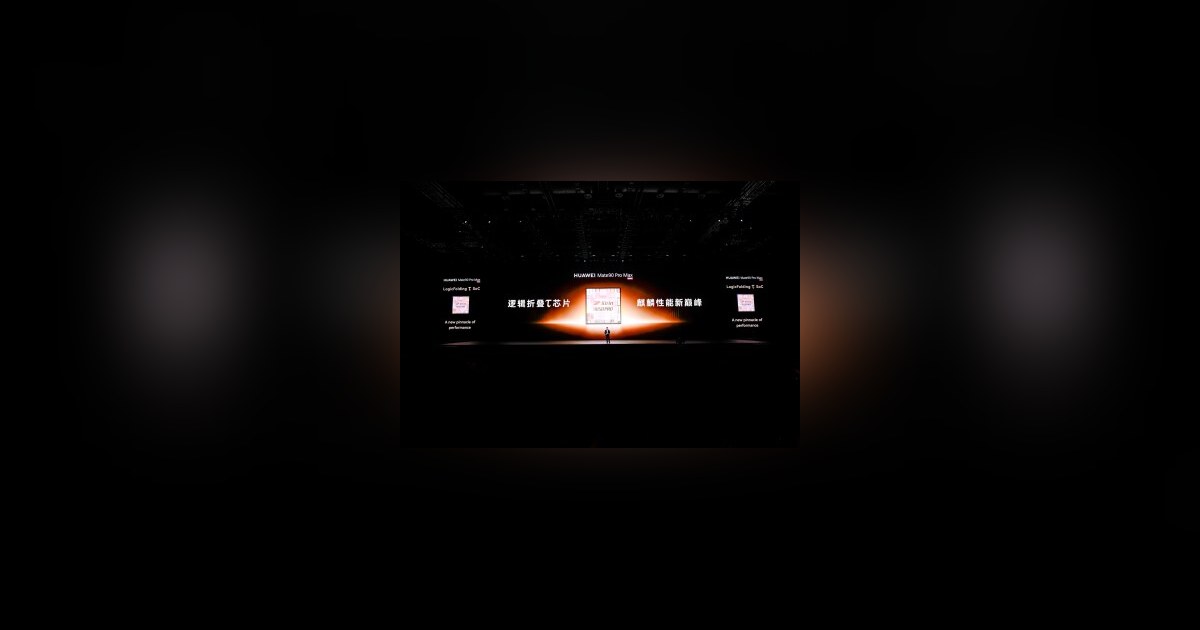
A major breakthrough came in the semiconductor domain with LogicFolding technology under the Tau Scaling Law. Unveiled by He Tingbo, head of Huawei's Semiconductor Business Department, in May, this approach vertically stacks logic layers and restructures circuit layouts through high-density interconnects to shorten critical paths and reduce latency. The technology was adopted on the Kirin 9050 Pro, enabling the Mate 90 series to run a 30-billion-parameter Mixture of Experts on-device AI model. Yu confirmed that LogicFolding chips will appear in more phones in the future, though he acknowledged that advanced semiconductor production capacity in China remains tight and is shared with Ascend AI chips.
HarmonyOS, Huawei's operating system ecosystem, now runs on more than 90 million devices, including smartphones, PCs, and tablets, a figure expected to reach 100 million by year's end. The ecosystem boasts over 450,000 apps and services, 11 million registered developers globally, and more than 23,000 app innovation partners. Yu said Huawei is considering gradually bringing HarmonyOS to the global market. This development matters because it represents a third major OS ecosystem after Apple's iOS and Google's Android, potentially giving Huawei a unique competitive edge in cross-device integration.
Huawei's strategy spans five key scenarios: smart travel, office, smart home, fitness and health, and entertainment. The company offers a broad range of products, from wearables—where it holds the top global market share—to tablets and CPE mobile routers that connect remote areas. While Huawei's global smartphone sales have shrunk to several million units annually outside China, Yu revealed plans to return to overseas markets step by step. The company has largely eliminated dependence on US technologies by developing its own chips, OS, and domestic supply chain.
Industry observers note that Huawei's progress carries broader implications for the tech sector. The company's ability to innovate under constraints could inspire other firms facing similar challenges, while its re-entry into global markets may intensify competition. As Huawei continues to push boundaries in AI, chips, and software, its trajectory will be closely watched. For a deeper look at the Q&A session, readers can visit the full transcript.