In the competitive landscape of multifamily development, the internal structure of a company can significantly influence the final product. Firms that handle development, construction, leasing, and property management under one roof operate with a different decision-making dynamic compared to those that outsource each stage. This distinction often translates into measurable differences in both project speed and quality.
When the same organization that designs a building also retains ownership over the long term, the individuals making early decisions are the same ones who must live with the results. This alignment eliminates a common source of compromise in development. Yuval Shram, Founder and CEO of TAY Investments, emphasizes this advantage. His firm is currently delivering LAZUL WEST, a 202-unit property at 301 West Side Avenue in Jersey City. “When you own the full life cycle, you understand everything,” Shram explains. “You make every decision knowing you will own the property for the long term, so you build it to last.” This approach prioritizes durability and resident experience over a quick handoff, leading to choices optimized for long-term value.
Vertical integration also allows a developer to maintain momentum while refining the project in real time. Because TAY acts as its own general contractor, design adjustments and construction can proceed concurrently, coordinated within a single team rather than renegotiated across separate contracts. Shram describes this as managing a large, interconnected system with a single hand on every component. Altering one element, such as a building entrance, impacts utilities, access, and site planning simultaneously. Keeping these relationships internal ensures that the project advances smoothly and the finished product aligns precisely with the team's vision. At LAZUL WEST, this coordination enabled construction to stay on schedule while plans were refined to a higher standard.
The benefits of this structure extend well beyond the construction phase. TAY's leasing and management teams are involved during the design process, ensuring the building is shaped around how residents will actually use it. “Our leasing agent will look at the plans and tell us where we can make them better,” Shram notes. “She might say a layout needs more walk-in closet space, because that is something residents value, so we build it in.” Similarly, electric-vehicle charging was added early because the operating team recognized resident demand. “Those small touches are what create the value of a building,” he adds, demonstrating how operational insights directly influence design decisions.
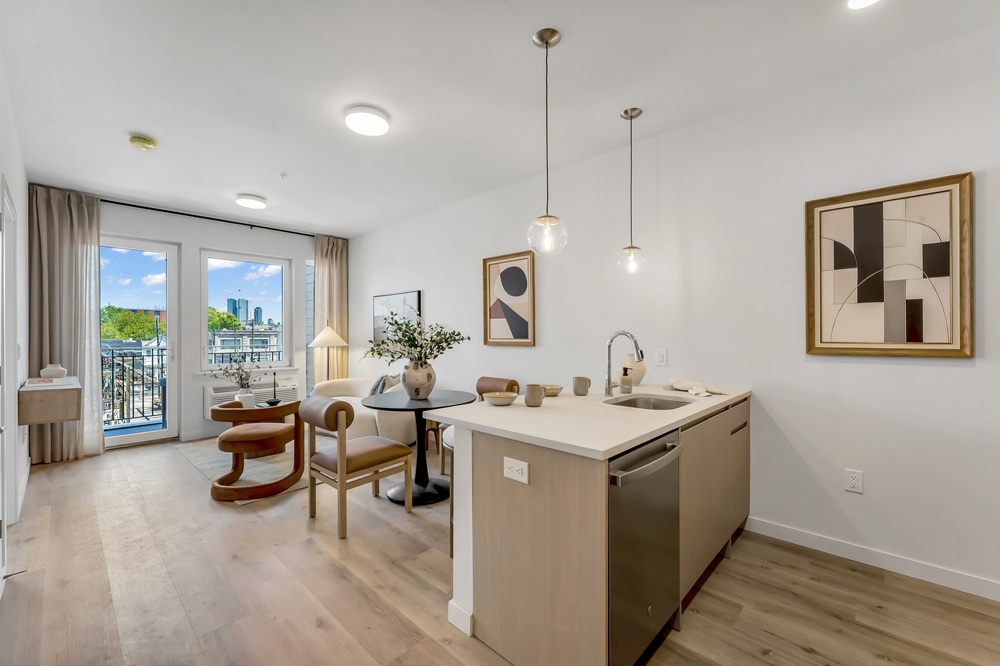
As development expands into emerging neighborhoods like Jersey City's West Side, the ability to control quality from start to finish is becoming a key differentiator. A developer that builds and operates its own assets can maintain a consistent standard from the initial drawings through years of management. LAZUL WEST, now delivered and leasing, exemplifies this approach, showcasing how vertical integration can lead to superior outcomes in both speed and quality.