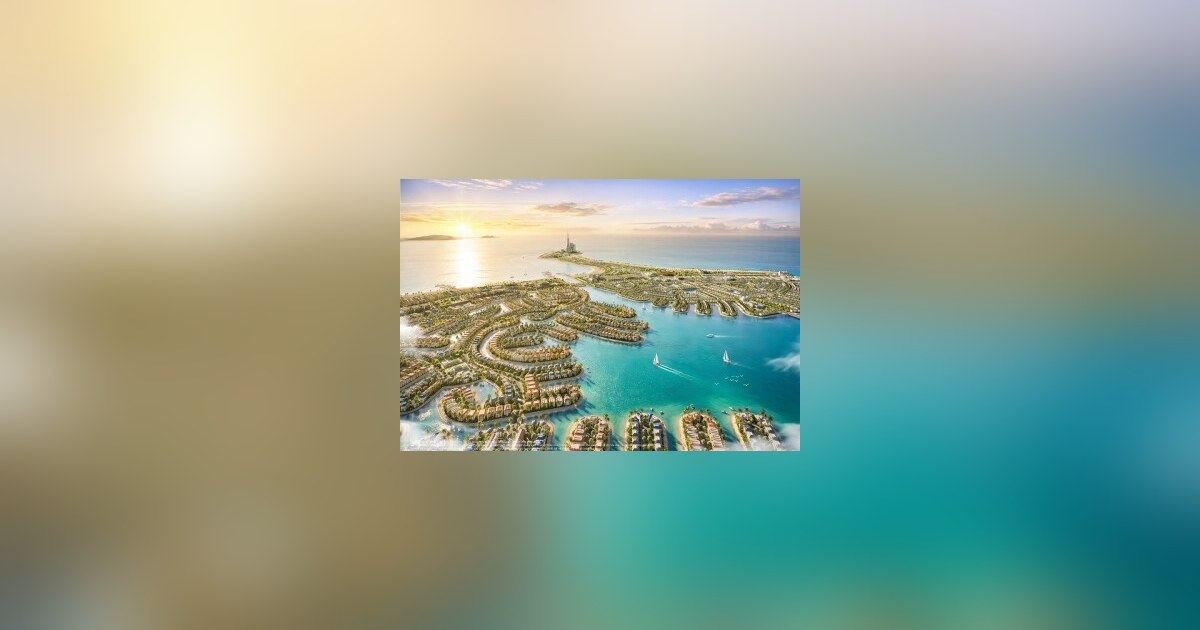
Vinhomes is developing Vinhomes Green Paradise, a 2,870-hectare ESG++ coastal urban area in Can Gio, southeastern Ho Chi Minh City, with a focus on minimizing the time residents spend traveling to daily destinations. The project, announced via Media OutReach Newswire, aims to address the growing challenge of traffic congestion in fast-growing cities by combining rapid transit links with a self-contained ecosystem of services and amenities.
The master plan rests on two pillars: new transport infrastructure and an integrated on-site ecosystem. The Ben Thanh-Can Gio high-speed railway, targeted for commercial operation in the fourth quarter of 2028, is designed to connect the area with downtown Ho Chi Minh City in about 20 minutes. Additionally, the planned Can Gio Bridge and a widened Rung Sac Boulevard are expected to cut drive times to approximately 35 minutes. These developments are poised to transform Can Gio from a primarily ferry-accessed area into a well-connected urban zone.
The second pillar is an on-site ecosystem that includes 104 planned schools, an international general hospital, more than 2 million square meters of office space, and over 370 parks. This design intends to place most daily needs within reach of home, reducing the number of trips residents must make. For instance, the Vinschool K-12 system and Brighton College Vietnam will provide education options locally, while Vinmec Can Gio International General Hospital, developed with Cleveland Clinic as strategic advisor, will offer international-standard healthcare. More than 2 million square meters of office space is expected to allow residents to work near where they live, as financial and technology businesses establish a presence in the area.
The project's approach responds to a shift in how urban households assess where to live. In fast-growing cities, a home only a few kilometers from the workplace can still require hours in traffic each week. For a resident who saves 15 minutes each way, the gain is about 11 hours a month over 22 working days. Academic research supports the significance of such savings. Using German household data from 1985 to 1998, University of Zurich economists Alois Stutzer and Bruno Frey identified a "commuting paradox": people with longer commutes consistently reported lower life satisfaction, contrary to the standard assumption that they are fully compensated by higher pay or better housing. By their estimate, a person commuting one hour each way would need roughly 40% more income to be as satisfied as someone with no commute.
In Ho Chi Minh City, where rapid growth has outpaced the expansion of the road network, traffic congestion remains a significant cost to residents and the local economy. For many homebuyers, the relevant question is increasingly not how far a property is from the center, but how long it takes to get there. The integration of rail and road links is expected to give residents a choice between rail for direct trips to the center and road travel for journeys with multiple stops. International research points to a link between transit access and property values. A study commissioned by the American Public Transportation Association (APTA) and the National Association of Realtors (NAR), which tracked five U.S. metropolitan regions from 2006 to 2011, found that homes within half a mile of high-frequency transit outperformed their wider regions by 41.6% over the period, which included the Great Recession. A 2019 follow-up study found that homes near transit sold at median prices 4% to 24% higher than those farther away.
Beyond the commute, Vinhomes Green Paradise is planned to bring education, healthcare, work, retail, and recreation inside the community, so that school runs, medical visits, shopping, and exercise require shorter trips or none at all. Key components include 104 planned schools, Vinmec Can Gio International General Hospital, more than 2 million square meters of office space, and more than 370 parks and green areas. Retail and leisure amenities include Vincom shopping centers, a 20-hectare premium outlet, the 46-hectare Cosmo Bay dining and entertainment complex, two golf courses covering 155 hectares, the 122-hectare VinWonders theme park, and Song Xanh Theater. Green space is a priority, with more than 370 parks and green areas planned to place open space within 500 meters of every residence, linked by walking paths and bicycle lanes. The Trust for Public Land estimates, conservatively, that buyers pay 5% to 15% more for homes within three blocks of a well-maintained park.
The project draws on planning principles that cities such as Copenhagen and Singapore have applied for years: development organized around public transit, mixed land use, and walkable neighborhoods. At Vinhomes Green Paradise, high-speed rail, education, healthcare, offices, and recreation are being planned together from the outset rather than added incrementally, with the aim of measuring a home's location by the time it returns to residents. For more information, visit https://vinhomes.vn/en.