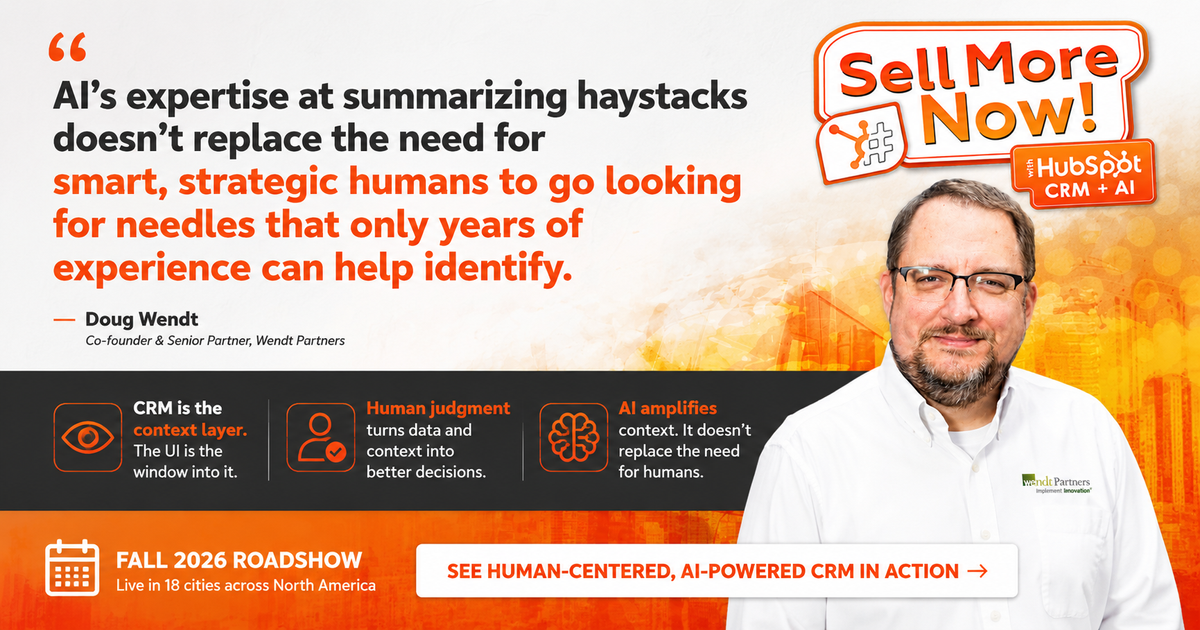
The rise of artificial intelligence in customer relationship management has sparked a contentious debate: Is the traditional CRM interface becoming obsolete? A vocal movement suggests that the future lies in headless CRM, where salespeople interact with data through voice commands, chat platforms like Slack or Teams, or even text messages, bypassing the traditional screen. However, Wendt Partners, a HubSpot Elite Solutions Partner, challenges this narrative, asserting that a robust visual CRM UI/UX is more essential than ever in the age of AI.
In a recent announcement, Wendt Partners argues that the headless approach undermines the strategic, thoughtful engagement required for complex B2B selling. The firm emphasizes that while AI can process vast amounts of data, it is the human-in-the-loop who must absorb context, weigh nuances, and make informed decisions. A visual interface, they contend, provides the necessary structure for salespeople to review, analyze, and act on AI-generated insights effectively. Without it, the risk of superficial understanding and hasty decisions increases, potentially harming customer relationships and sales outcomes.
The company's position is that AI enhances, rather than replaces, the importance of a well-designed CRM interface. By sharpening the data presented to sales professionals, AI can cut through noise and highlight critical information. However, the human must still engage thoughtfully with that information, a process that is best supported by a clear, organized visual layout. Voice or chat interfaces, while convenient for quick updates, lack the depth needed for strategic planning and complex deal management.
Wendt Partners is not alone in this perspective. Many CRM experts argue that the interface is not just a data entry tool but a workspace for decision-making. The headless trend, they say, overlooks the cognitive benefits of visual data representation, such as pattern recognition and spatial memory. For sales teams dealing with long sales cycles, multiple stakeholders, and intricate product details, a comprehensive CRM dashboard is indispensable.
The announcement also highlights the need for a balanced approach to AI adoption. Rather than replacing human judgment, AI should augment it. This philosophy is central to Wendt Partners' methodology, which they are showcasing in their upcoming Sell More Now with HubSpot CRM + AI Fall 2026 Roadshow. The roadshow aims to demonstrate how businesses can leverage AI within a human-centered CRM framework to drive growth.
As AI continues to evolve, the debate over CRM interfaces is likely to intensify. However, Wendt Partners' stance underscores a critical point: technology should serve people, not the other way around. For organizations investing in AI, ensuring that their sales teams have the right tools to interpret and act on AI-driven insights is paramount. A headless approach may offer convenience, but it may also sacrifice the depth of understanding needed for successful, human-in-the-loop selling.
In conclusion, while headless CRM may appeal to those seeking simplicity, the complexities of B2B sales demand a more robust solution. Wendt Partners' advocacy for a visual, structured CRM interface in the age of AI serves as a reminder that the human element remains irreplaceable. As companies navigate the AI revolution, they would do well to consider how their CRM design impacts their sales team's ability to think critically and build meaningful customer relationships.